Category: Articles

Intergenerational Stewardship: Helping Three Generations Navigate a Season of Change

At KERUX, we believe we are more than financial advisors; we are partners in the earthly and eternal journeys of the families we serve. One story that captures this mission is how we supported a family spanning three generations through a complex season of transition.

The Challenge

Recognizing the Shift

We had worked for years with a couple well into their golden years. As the mother’s health began to decline due to dementia, we recognized a looming shift. Her daughter—also a KERUX client—would eventually need to step in, not just emotionally, but legally and financially.

The Friction

Balancing Autonomy and Protection

These transitions are often fraught with emotion. It is difficult for a parent to accept a child’s help, especially during cognitive decline. We observed the tension: a mother frustrated by her limitations, an aging father facing his own hurdles, and a daughter seeking a way to lead without creating family friction.

Faithfulness in the “Earthly” details leads to “Abundance” and peace for the entire family.

The Strategy

Facilitating Order

Our role became more than just managing investments. We facilitated a meeting with all parties—mom, dad, daughter, and son-in-law—creating a space for open conversation. We explained how making the daughter a co-trustee and granting her medical powers of attorney wasn’t about taking away autonomy—it was about ensuring that mom had a trusted partner to help her navigate financial and medical decisions as her needs evolved.

We framed the transition as Stewardship, not Surrender. By establishing the daughter as a co-trustee and granting medical powers of attorney, we weren’t removing the mother’s autonomy—we were securing a trusted partner to protect her legacy.

The Result

Peace of Mind for Three Generations

By connecting the family with a trusted attorney and streamlining the legal process, we ensured that the daughter was empowered to act when the time came. This preparation proved invaluable as the family navigated:

What began as an advisory relationship became a testament to our core belief: that faithfulness in the “Earthly” details leads to “Abundance” and peace for the entire family.

The Beauty of a Life in Order

True wealth is found in the moments where financial planning meets the needs of the heart. What began as an advisory relationship became a testament to our core belief: that faithfulness in the “Earthly” details leads to “Abundance” and peace for the entire family.

By bringing order to the chaos of transition, we didn’t just manage an estate; we protected a family’s ability to love and honor one another during their most vulnerable season. At KERUX, this is what it means to invest in eternity—ensuring that your legacy is marked not by friction, but by the quiet confidence of a life well-stewarded.

Is your family prepared for the seasons ahead?

We specialize in bringing order to the complexities of intergenerational wealth so that you can focus on what matters most: honoring your loved ones. Let’s start a conversation today about securing your family’s peace of mind for the journey ahead.

Fiduciary Duty & Professional Advice: Advisory services are offered through KERUX, LLC, a registered investment adviser. We are held to a fiduciary standard, legally obligating us to act in our clients’ best interests at all times. This content is for educational and illustrative purposes only and does not constitute personalized investment, tax, or legal advice.

Case Studies & Illustrative Examples: The “Intergenerational Stewardship” story presented is for illustrative purposes to demonstrate our planning process and the types of challenges we help families navigate. While inspired by real-world advisory experiences, this narrative is a composite or anonymized example and does not represent the specific performance or results of any one individual client. Your experience may vary based on your unique financial situation.

Coordination of Professional Counsel: This story discusses legal and medical planning, such as Co-Trusteeships and Medical Powers of Attorney. KERUX, LLC is not a law firm or medical provider. We act as a facilitator to coordinate with your external legal and tax professionals; however, you should consult with your own qualified legal counsel and tax professionals before implementing any legal or estate strategy discussed herein.

Risks & Suitability: All financial strategies involve material risks. Faith-based financial planning has inherent limitations and may not account for every market variable; therefore, past outcomes are not indicative of future results. Actual results will vary and may include the loss of principal.


Beyond the DAF: Strategic Giving Vehicles for Maximizing Impact and Income

Strategic charitable giving vehicles and advanced financial planning for maximizing Kingdom impact

For many families, charitable giving begins—and often ends—with a donor-advised fund. DAFs are simple, flexible, and effective. But for those stewarding substantial assets, they are often just the starting point, not the destination.

At a certain level of complexity, generosity deserves to be as thoughtfully engineered as the wealth that funds it.

Advanced charitable strategies allow families to move beyond transactional giving and into mission-aligned stewardship—where assets are optimized for income, tax efficiency, and Kingdom impact simultaneously. When structured correctly, these strategies can preserve lifestyle, reduce unnecessary taxation, and dramatically expand the legacy ultimately left to ministries and causes that matter most.

This is where trusts, foundations, and advanced charitable vehicles come into play.

When Giving Becomes Strategy, Not Sacrifice

The most effective charitable planning does not begin with tax minimization. It begins with clarity of mission.

Once a family is clear on what they are trying to accomplish—supporting ministries, advancing the Gospel, funding long-term Kingdom work—the planning conversation changes. Instead of asking, “How much should I give?” the better question becomes:

“How can I align what I already own with what I believe God has called me to do?”

Often, the answer involves repurposing existing assets rather than giving from excess cash flow alone.

How can I align what I already own with what I believe God has called me to do?

Example: Turning a Low-Basis Rental Property into Income, Impact, and Legacy

Consider a family that owns a rental property with a very low cost basis due to years of depreciation. Selling the property outright would trigger significant capital gains and depreciation recapture taxes—potentially destroying a large portion of the asset’s value.

Yet the property only produces modest income, say 5% annually, and the family also has high current income they would like to offset with deductions.

This is where a charitable remainder trust (CRT) can become extraordinarily powerful.

How the Strategy Works

1.

The property is contributed to a charitable remainder trust.

2.

The trust sells the property without triggering immediate capital gains tax.

3.

The proceeds are reinvested inside the trust.

4.

The family receives a lifetime income stream.*

*This typically starts at the IRS-mandated 5% minimum annual distribution.

5.

They receive a substantial current income-tax deduction for the charitable remainder interest.

6.

At the end of the trust term, the remaining principal passes to charity.

The result

No forced sale tax at the time of disposition

More capital working for the family instead of the government

Predictable income that replaces the rental cash flow

A future, outsized gift to ministry

This is not giving less. It is giving smarter.*

*CRTs are irrevocable and involve investment risk, ongoing costs, and administrative complexity. Income is not guaranteed and may vary based on market conditions and trust performance. Tax outcomes and charitable benefits depend on individual circumstances and applicable law. A CRT may not be suitable for all investors.

Restoring the Asset to the Family

(If Income Isn’t Needed)

In many cases, the family doesn’t actually need the income stream from the trust to support their lifestyle.

In those scenarios, an additional layer can be added.

Some or all of the CRT income can be redirected to fund a life insurance strategy held outside the estate. When structured properly, this can:

  • Replace the value of the donated asset for heirs
  • Pass income-tax-free to the next generation
  • Preserve family legacy and Kingdom legacy

In effect, the family converts a taxable, inefficient asset into:

  • A current tax deduction
  • A charitable legacy
  • A tax-free inheritance

This strategy is designed to optimize your charitable impact and tax efficiency.*

*It is important to note that these vehicles are generally irrevocable and involve material trade-offs, such as the loss of direct control over the underlying assets and the costs associated with specialized life insurance and trust administration.

Advanced Planning with IRAs: Solving the Stretch Problem

Changes to IRA distribution rules have made large retirement accounts far less efficient for heirs. Many families now face accelerated taxation that erodes the value of what they intended to pass down.

For families who are charitably inclined, charitable trusts can once again become the solution.

By directing IRA assets into a charitable trust at death:

  • Heirs can receive income over an extended period
  • The immediate tax burden is reduced
  • The remainder ultimately passes to charity
  • The IRA becomes aligned with Kingdom purposes rather than tax friction

This is particularly compelling for families without direct heirs—or those who want to treat heirs fairly while still prioritizing ministry impact.

Heirs can receive income over an extended period

The immediate tax burden is reduced

The remainder ultimately passes to charity

The IRA becomes aligned with Kingdom purposes

From Assets to Assignment

What all of these strategies have in common is this:

They treat wealth not merely as something to be consumed or preserved, but as something to be assigned.

Businesses, real estate, concentrated stock, and retirement accounts can all be repositioned to serve a higher purpose—without reckless sacrifice and without unnecessary taxation.

This is not about avoiding taxes for their own sake.

It is about redeeming resources.

When generosity is paired with wisdom, the result is not less—it is multiplication.

A Kingdom-Aligned Conclusion

Advanced charitable strategies are not for everyone. But for families who have been entrusted with much, they offer a way to live out stewardship intentionally—honoring God, providing for family, and strengthening ministries far beyond what simple cash giving would allow.

The question is no longer, “How much can I afford to give?”

It becomes:

“What does it look like to fully align what I own with what I believe?”

Scripture Footnotes

  1. “Command them to do good, to be rich in good deeds, and to be generous and willing to share.” — 1 Timothy 6:18
  2. “Each of you should give what you have decided in your heart to give, not reluctantly or under compulsion, for God loves a cheerful giver.” — 2 Corinthians 9:7
  3. “Whoever sows sparingly will also reap sparingly, and whoever sows generously will also reap generously.” — 2 Corinthians 9:6
  4. “Moreover, it is required of stewards that they be found faithful.” — 1 Corinthians 4:2
  5. “Do not store up for yourselves treasures on earth… but store up for yourselves treasures in heaven.” — Matthew 6:19–20
  6. “The earth is the Lord’s, and everything in it.” — Psalm 24:1

Is Your Giving Optimized for Impact?

Advanced charitable strategies are about more than tax efficiency—they are about maximizing the resources God has entrusted to you. If you are ready to explore how to fully align your wealth with your calling, let’s start a conversation.

Fiduciary Duty & Professional Advice: Advisory services are offered through Kerux, LLC, a registered investment adviser. We are held to a fiduciary standard, legally obligating us to act in our clients’ best interests at all times, regardless of the spiritual or faith-based framing of our planning. This content is for educational and illustrative purposes only and does not constitute personalized investment, tax, or legal advice.

Risks & Suitability: All strategies involve material risks and depend on an individual’s unique circumstances. The returns and dollar amounts shown are hypothetical, illustrative examples only and are not based on actual client results. They assume a generalized investment strategy over a long-term time horizon and do not reflect fees, taxes, or individual investor circumstances. Hypothetical performance does not reflect actual trading and has inherent limitations; actual results will vary and may include loss of principal. Faith-based financial planning has inherent limitations and may not account for every market variable; therefore, past outcomes are not indicative of future results. Because every financial situation is unique, you should consult with your own financial advisor, tax professional, and/or legal counsel before implementing any strategy discussed herein.

Testimonials & Endorsements: Any testimonial or endorsement provided is from a current or former client who was not compensated for their statement. There are no material conflicts of interest that would affect the validity of the testimonial, and all materials are reviewed in accordance with internal compliance procedures.

How Much Should You Be Giving?

Man looking into his wallet full of money deciding on how much to give.

Moving from a Percentage to a Posture of Trust

The question “How much should I be giving?” is one of the most common—and most misunderstood—questions in Christian stewardship.

Some people look for a formula. Others dismiss structure altogether and say, “Just give whatever God puts on your heart.” Both perspectives contain truth—but neither tells the whole story.

At its core, giving isn’t about hitting a number. It’s about trust. And trust always costs something.

Giving isn’t about hitting a number. It’s about trust. And trust always costs something.

Giving Begins With the Heart, Not the Calculator

Scripture is clear that God is not after our money—He’s after our hearts. Giving is one of the primary ways He reveals where our trust truly lies.

Jesus Himself made this connection explicit:

“For where your treasure is, there your heart will be also.”¹

So when we ask how much we should give, the better question may be: Does my giving require me to rely on God?

If our giving is comfortable, unnoticeable, or purely leftover, it rarely challenges our independence. And God has never been interested in independence—He desires dependence.

The Pattern of First and Best

From the very beginning, Scripture establishes a pattern: God desires the first and the best, not the excess.

In the story of Cain and Abel, both bring offerings—but only Abel’s is accepted. Why? Scripture hints that Abel brought from the firstborn of his flock, while Cain brought “some” of his produce.² The difference wasn’t generosity alone—it was priority.

Firstfruits create intentional lack. They force trust. They leave room for God to provide.

This theme continues throughout the Old Testament, where a tenth—a tithe—appears repeatedly as a meaningful starting point.³ Not as a ceiling, but as a foundation.

Firstfruits create intentional lack. They force trust. They leave room for God to provide.

Why 10% Is a Starting Point, Not the Goal

For many believers, 10% serves as a helpful baseline—not because it earns favor, but because it introduces obedience with consequence.

Ten percent is enough to be felt.

Enough to require planning.

Enough to remind us that everything we have is not actually ours.

When giving is merely symbolic—like a small, spontaneous amount that never impacts our lifestyle—it rarely reshapes our faith. But when giving creates a tangible margin of need, it invites God into the equation.

Scripture consistently ties provision to obedience:

“Bring the full tithe… and see if I will not open the windows of heaven for you.”⁴

That promise isn’t transactional—it’s relational.

“Give What’s on Your Heart”… But Through the Right Lens

The New Testament does emphasize cheerful, willing generosity.⁵ But this is often misunderstood as permission to abandon intentionality.

“Give as you feel led” is not an excuse to avoid discipline.

It assumes a heart already shaped by trust, surrender, and obedience.

Paul’s instruction to give willingly was written to believers who already understood sacrifice—not to those seeking convenience.⁶

The heart-led model only works when the heart has first been trained.

From Percentage to Purpose: Giving as a Mission

Once a baseline of trust is established, the conversation can—and should—evolve.

Giving is not just about how much, but why and where.

At this stage, generosity becomes strategic:

Supporting the local church

Funding gospel-centered work

Investing in causes aligned with your calling

Using assets and influence to advance Kingdom impact

Scripture affirms this kind of intentional generosity:

“You will be enriched in every way so that you can be generous on every occasion.”⁷

God doesn’t bless us so we can accumulate—He blesses us so we can participate.

The Real Question

So how much should you be giving?

Enough that:

  • You notice it
  • You plan for it
  • You rely on God because of it
  • You are changed by it

Giving is not about checking a box.

It’s about forming a life that says, “I trust You more than I trust myself.”

And that posture—more than any percentage—is what God is after.

Scripture Footnotes

  1. Matthew 6:21
  2. Genesis 4:3–5
  3. Genesis 14:20; Leviticus 27:30; Proverbs 3:9–10
  4. Malachi 3:10
  5. 2 Corinthians 9:6–7
  6. 2 Corinthians 8:1–5
  7. 2 Corinthians 9:11
  8. Luke 16:10–11
  9. Hebrews 11:6
  10. Proverbs 11:24–25

Ready to align your wealth with your calling?

Giving is more than a transaction; it’s an act of worship. If you are looking for a partner to help you integrate your faith with your financial strategy, let’s start a conversation. We’ll help you move from a percentage to a purpose-driven plan.

Fiduciary Duty & Professional Advice: Advisory services are offered through Kerux, LLC, a registered investment adviser. We are held to a fiduciary standard, legally obligating us to act in our clients’ best interests at all times, regardless of the spiritual or faith-based framing of our planning. This content is for educational and illustrative purposes only and does not constitute personalized investment, tax, or legal advice.

Risks & Suitability: All strategies involve material risks and depend on an individual’s unique circumstances. Faith-based financial planning has inherent limitations and may not account for every market variable; therefore, past outcomes are not indicative of future results. Because every financial situation is unique, you should consult with your own financial advisor, tax professional, and/or legal counsel before implementing any strategy discussed herein.

Testimonials & Endorsements: Any testimonial or endorsement provided is from a current or former client who was not compensated for their statement. There are no material conflicts of interest that would affect the validity of the testimonial, and all materials are reviewed in accordance with internal compliance procedures.

A Faith-Forward Fresh Start: How to Align Your Calling, Stewardship, and Legacy in 2026

Christian family celebrating the new year together

The New Year Is a Spiritual Reset, Not Just a Financial One

January is when most people re-evaluate their finances, their goals, and their priorities. But for Christian families, especially those entrusted with significant influence and resources, a new year is more than a planning season — it is a moment to recalibrate your heart, your mission, and your stewardship.

At KERUX, we believe true financial planning begins not with money, but with calling.

This is why our Faith Forward Framework starts with:

Uncover icon

Uncover God’s Calling

Steward icon

Steward God’s Gifts

Harvest icon

Harvest God’s Abundance

If 2026 is going to be a year of clarity, purpose, and generational strength, it starts with aligning all three.

Below is a simple, powerful way to begin that journey — with two books that will help you define your calling, deepen your family legacy, and awaken a stewardship mindset that lasts for generations.

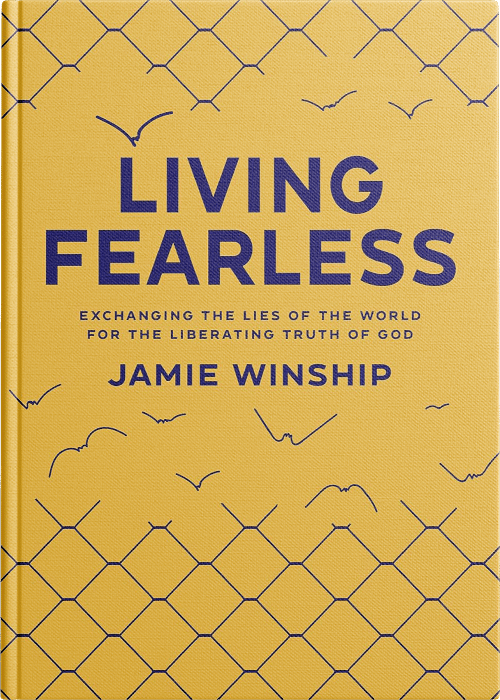
Living Fearless by Jamie Winship book cover
Step 1

Uncover God’s Calling

Living Fearless by Jamie Winship

Most Christians want to follow God’s will, but struggle to define:

  • What is God actually calling me to do?
  • Who am I supposed to serve?
  • Where is my mission field?
  • When does God want me to step out?

Living Fearless is one of the most practical and transformative books to answer those questions.

Why This Book Matters for Faith-Driven Planning

Jamie Winship teaches believers how to:

  • Hear God’s voice clearly
  • Understand identity before activity
  • Discover their Kingdom assignment
  • Replace fear with trust
  • Discern what God is actually inviting them to build

For individuals, couples, and families, this book becomes a spiritual compass. For high-capacity leaders and wealth creators, it becomes a mission blueprint.

How This Fits the Faith Forward Framework

Uncovering God’s Calling must come before creating wealth plans or legacy strategies.

Your calling determines:

  • Your priorities
  • Your philanthropic vision
  • Your investment approach
  • Your business decisions
  • How you lead your family

This is why every Kerux client begins with calling — not cash flows.

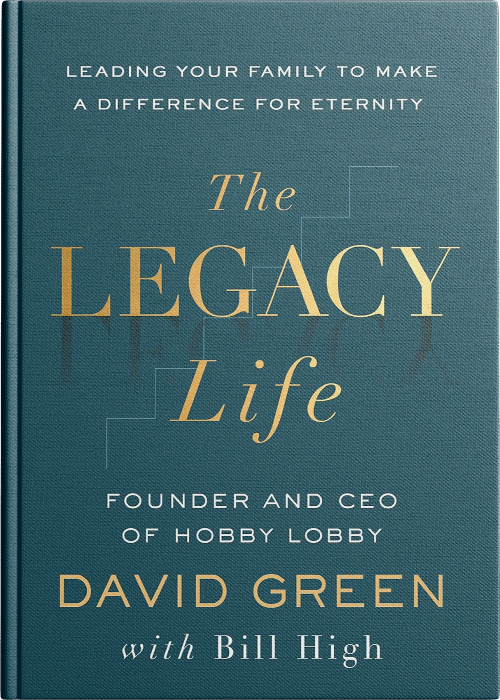
The Legacy Life by David Green book cover
Step 2

Steward God’s Gifts

Legacy Life by David Green

Once calling is understood, the next step is to steward what God has placed in your hands.

Legacy Life, written by Hobby Lobby founder David Green, is one of the clearest Christian roadmaps on how to steward:

  • Wealth
  • Influence
  • Business
  • Family dynamics
  • Values
  • Kingdom direction

Why This Book Matters for Christian Families

David Green doesn’t just teach how to pass money to the next generation — he teaches how to pass:

  • Purpose
  • Convictions
  • Generosity
  • Biblical identity
  • Eternal mindset

He helps Christian families answer essential questions:

  • What legacy are we building?
  • How do we keep our children grounded?
  • How do we maintain unity in times of blessing?
  • How do we transfer values — not entitlement?
  • How do we steward businesses and assets for the Kingdom?

How This Fits the Faith Forward Framework

Stewarding God’s gifts requires clarity in wealth, investments, talents, time, family relationships, philanthropy, and business leadership.

Legacy Life provides practical tools that align perfectly with the Kerux framework — ensuring stewardship is biblical, intentional, and generational.

Ready to begin charting your course to true abundance?

The Faith Forward Framework is the engine that drives every comprehensive plan at KERUX. If you want a clear roadmap for aligning your wealth with your purpose, explore the steps that guide all our clients.

Step 3

Harvest God’s Abundance

Build a Plan Aligned With Calling & Legacy

Once your calling and legacy priorities are defined, the next step is to create a game plan that aligns with them.

This is where KERUX’s Christian Wealth Office becomes a strategic partner.

Harvesting God’s Abundance Means:

  • Building a generosity plan
  • Designing an estate plan shaped by values
  • Aligning investments with Kingdom impact
  • Protecting family unity
  • Optimizing taxes to redirect more resources toward God’s work
  • Creating financial systems that outlive you

The Biblical Foundation

Scripture teaches that the purpose of wealth is:

“God… richly provides us with everything for our enjoyment.” 1 Timothy 6:17

and also:

“…so that you will be generous on every occasion.” 2 Corinthians 9:11

In other words:

God provides abundance for His glory, our joy, and the good of others.

Harvesting God’s abundance is not hoarding, but faithfully aligning wealth with the mission He gave you.

Your 2026 Faith-Forward Game Plan

Here is a simple, transformative path to begin the year:

1.

Read Living Fearless

Define your Kingdom identity and calling.

2.

Read Legacy Life

Clarify your legacy, values, and generational mission.

3.

Schedule a Faith-Forward Wealth Audit

Let KERUX help you build a financial strategy that aligns with both.

We help families connect calling → to purpose, purpose → to planning, planning → to legacy, and legacy → to eternal return.

The Best Time to Realign Your Life With God’s Calling Is Now

2026 can be a year of:

Spiritual clarity

Purpose-driven wealth

Generational strength

Eternal impact

Biblical stewardship

But only if you begin with the right framework — and the right heart posture.

At KERUX, we don’t just manage money.

We walk with families as they discover:

  • Who God created them to be
  • What God is calling them to build
  • How to steward every gift for Kingdom impact
  • And how to harvest abundance for God’s glory

Ready to Begin Your Faith-Forward Journey?

Let’s build a plan aligned with God’s calling for you and your family in 2026.

Fiduciary Duty & Professional Advice: Advisory services are offered through Kerux, LLC, a registered investment adviser. We are held to a fiduciary standard, legally obligating us to act in our clients’ best interests at all times, regardless of the spiritual or faith-based framing of our planning. This content is for educational and illustrative purposes only and does not constitute personalized investment, tax, or legal advice.

Risks & Suitability: All strategies involve material risks and depend on an individual’s unique circumstances. Faith-based financial planning has inherent limitations and may not account for every market variable; therefore, past outcomes are not indicative of future results. Because every financial situation is unique, you should consult with your own financial advisor, tax professional, and/or legal counsel before implementing any strategy discussed herein.

Testimonials & Endorsements: Any testimonial or endorsement provided is from a current or former client who was not compensated for their statement. There are no material conflicts of interest that would affect the validity of the testimonial, and all materials are reviewed in accordance with internal compliance procedures.

Stewardship at Scale: Tax Planning for High-Net-Worth Christian Families

Man and his wife meeting with a financial advisor to review tax planning

Wealth, Calling & Eternal Return

Significant wealth is a blessing — but also a calling. Scripture reminds us that what we manage is ultimately God’s, and we are entrusted to steward it with wisdom:

“It is required that those who have been given a trust must prove faithful.” — 1 Corinthians 4:2

“Store up for yourselves treasures in heaven…” — Matthew 6:19–21

For affluent Christian families in California’s highest tax brackets, stewardship becomes even more strategic. With combined taxes often exceeding 50% at the margin, poor planning can result in millions going to taxes rather than Kingdom work.

Below are three advanced charitable strategies, complete with real dollar examples, that transform taxable events into opportunities for generosity, purpose, and eternal return.

Strategy 1

Gifting Pre-Liquidity Business Shares to a Donor-Advised Fund (DAF)

Ideal For: Business owners anticipating a sale, recapitalization, merger, or buyout.

California Tax Reality
A major liquidity event triggers:

  • Federal LTCG tax: 20%
  • California income tax: up to 13.3%
  • NIIT: 3.8%

Combined exposure for high earners: 37%+ on capital gains.

Practical Example

The California Founder Preparing for a Sale

Company Value
$ 0 M
Selling 40% Stake
$ 0 M
Cost Basis
$ 0 M

If sold outright (no planning):

  • Capital gains tax (Fed + CA + NIIT): ~$7.4M
  • Net proceeds: ~$12.6M

Faith-Forward Strategy

Gift 20% of your shares (worth $10M) into a Donor-Advised Fund before LOI or definitive agreement. This is a foundational step in Stewarding God’s Gifts strategically.

Tax Outcomes

  • $10M charitable deduction reduces ordinary income at the highest CA bracket → Up to $5M of federal + CA tax savings (depending on AGI limitations)
  • $0 capital gains tax on the donated shares
  • Remaining 20% sold personally → tax applies only to that portion
  • Family retains control of giving through DAF
  • Tens of millions ultimately directed to Christian ministries rather than taxes

Kingdom ROI

Instead of the IRS and state taking a massive cut, the founder redirects up to $12M–$15M toward Gospel impact over time, fulfilling the Harvest God’s Abundance pillar.

Strategy 2

Placing Highly Appreciated Real Estate Into a Charitable Remainder Trust (CRT)

Ideal For: CA property owners facing punitive taxes on sale.

California’s combined tax rate can approach 40% on real estate gains. This makes CRTs one of the strongest tools for both income and impact.

Practical Example

The Orange County Property Owner

Commercial Property Value
$ 0 M
Original Basis
$ 0 M

Desired action: Simplify portfolio + increase income

If sold outright:

  • Gain = $10M
  • Capital gains + CA tax = ~$3.7M–$4M
  • Net reinvestable proceeds = ~$8M

Faith-Forward Strategy: Fund a CRUT

Transfer property into a Charitable Remainder Unitrust, which sells tax-free.

Tax Outcomes

  • $0 capital gains tax at sale inside CRT
  • $12M reinvested (not $8M)
  • Annual income of 5%–7% → $600k–$840k per year
  • Federal charitable deduction: ~$1.8M–$2.5M
  • Deduction offsets CA’s highest brackets
  • Remaining trust assets (20–30% actuarially) eventually support Christian ministries

Kingdom ROI

Instead of losing $4M to taxes, the family:

  • Earns lifetime income
  • Diversifies risk
  • Gives millions to Kingdom causes
  • Eliminates a massive CA tax hit

Strategy 3

Donating LLC/LP Interests to a DAF + Using an ILIT to Replace Family Wealth

This strategy is common among affluent families who own:

  • Real estate partnerships
  • Family limited partnerships (FLPs)
  • Private equity holdings
  • Multi-entity business structures

Practical Example

The Family Limited Partnership (FLP)

Real Estate FLP Value
$ 0 M
Basis
$ 0 M
Annual Distributions
$ 0 M

The family wants to give generously but maintain inheritance goals for their children.

Faith-Forward Strategy

  1. Gift 10% of the FLP units to a Donor-Advised Fund → Gift value = $3M
  2. Receive charitable deduction on fair-market value → $3M deduction reduces taxes by $1.5M at CA’s bracket
  3. Use tax savings to fund a Wealth-Replacement ILIT → ILIT buys life insurance with $3M–$6M expected DB
  4. Heirs receive tax-free wealth
  5. DAF receives partnership income indefinitely

Tax Outcomes

  • No capital gains on donated units
  • Immediate deduction reduces top-bracket exposure
  • DAF receives ongoing K-1 income for Kingdom giving
  • ILIT replaces or exceeds wealth for heirs

Kingdom ROI

The family increases charitable leverage without decreasing the inheritance they plan to leave — a beautiful example of both/and stewardship and creating eternal ROI.

Why High-Capacity Christian Families in California Choose KERUXHQ

You need more than wealth management. You need a biblically aligned Christian Wealth Office specialized in:

California tax strategy

Liquidity event planning

Faith-driven estate planning

 Kingdom-focused generosity

Multi-generational family governance

Complex trusts, charitable structures & advanced planning

Integration of tax, investment, and generosity decisions

Our mission is to help families answer deeper questions:

“What is God calling us to build?”

“How much is enough?”

“What does eternal return look like for our family?”

The Eternal ROI Framework

In Matthew 6, Jesus redefines the meaning of return.

True ROI is not measured in dollars — but in disciples, impact, obedience, and transformed lives.

Advanced strategies such as:

  • Donor-Advised Funds
  • Charitable Remainder Trusts
  • Strategic real estate or business-interest gifting
  • Wealth replacement planning

…allow affluent Christian families to transcend California tax friction and fuel Kingdom work at a level that few households can. This is stewardship at scale.

Ready to Explore Faith-Driven Tax Strategy Tailored to California Families?

If you’re considering a business sale, real estate disposition, or partnership restructuring — or simply want a more aligned generosity plan — we’d be honored to serve.

Fiduciary Duty & Professional Advice: Advisory services are offered through Kerux, LLC, a registered investment adviser. We are held to a fiduciary standard, legally obligating us to act in our clients’ best interests at all times, regardless of the spiritual or faith-based framing of our planning. This content is for educational and illustrative purposes only and does not constitute personalized investment, tax, or legal advice.

Risks & Suitability: All strategies involve material risks and depend on an individual’s unique circumstances. The returns and dollar amounts shown are hypothetical, illustrative examples only and are not based on actual client results. They assume a generalized investment strategy over a long-term time horizon and do not reflect fees, taxes, or individual investor circumstances. Hypothetical performance does not reflect actual trading and has inherent limitations; actual results will vary and may include loss of principal. Faith-based financial planning has inherent limitations and may not account for every market variable; therefore, past outcomes are not indicative of future results. Because every financial situation is unique, you should consult with your own financial advisor, tax professional, and/or legal counsel before implementing any strategy discussed herein.

Testimonials & Endorsements: Any testimonial or endorsement provided is from a current or former client who was not compensated for their statement. There are no material conflicts of interest that would affect the validity of the testimonial, and all materials are reviewed in accordance with internal compliance procedures.

How a Donor-Advised Fund Helped One Couple Give More and Pay Less in Taxes

Learn how one couple reduced their taxes, eliminated capital gains, and multiplied their charitable impact through a $300,000 donor-advised fund gift at the peak of their income year.

Total Gift
$ 299000
Total Tax Savings
$ 99000 +

A Smart Way to Turn a Financial Peak into a Kingdom Opportunity

When approaching retirement, one couple found themselves at a financial crossroads. As they entered their final year of full-time employment, deferred compensation and bonuses projected this to be their highest-income year ever.

At the same time, they held a large position in a single stock that had performed extremely well. The gains were substantial, but the future of the stock was uncertain. Should they sell and face significant capital gains? Hold and risk a market drop?

Instead, they chose a third option — one that embodied the Faith Forward Framework and their commitment to their faith and financial stewardship: They utilized our expertise to donate $300,000 of appreciated stock to a Donor-Advised Fund (DAF).

The Strategy in Action

Event
Description
Result/Benefit
Appreciated Stock Gifted
They transferred $300,000 of long-term appreciated stock into a DAF. The stock’s cost basis was only ~$25,000.
No capital gains tax due on the ~$275,000 unrealized gain.
Immediate Deduction
Because they gifted the stock directly to charity (via the DAF), they received a $300,000 charitable deduction.
Reduced taxable income in their final high-earning year.
Double Benefit
1) Avoided capital gains tax.
2) Received a full income tax deduction for the gift.
Saved roughly $110,000–$120,000 in combined federal and state taxes.
Ongoing Investment
The stock was kept invested within the DAF. It continued to grow tax-free.
The stock appreciated further, increasing their charitable capacity.
Future Giving
The couple could recommend grants from their DAF over future years — including their ongoing tithes.
They “pre-funded” years of giving while capturing today’s tax benefit.

Timing and Strategic Stewardship: Why They Gave When They Did

Charitable deductions are limited to a percentage of Adjusted Gross Income (AGI)—typically 30% of AGI for appreciated assets. In this specific scenario, the couple’s AGI was $350,000, allowing an immediate deduction of up to $105,000 (30% of AGI) in the current year, with the remaining deduction available to be carried forward for five additional years.

The strategic timing of the full $300,000 DAF gift across two tax years allowed us to maximize their stewardship by achieving the following critical outcomes:

Maximized Deductions

They optimized the allowable deduction available in each tax year.

Smoothed the Benefit

The deduction was strategically applied into retirement years when income dropped to around $200,000 per year from pensions and part-time work.

Zero Loss of Benefit

None of the substantial charitable deduction went unused, securing the greatest possible financial advantage for their mission.

Case Study Snapshot

Year
Household Income
DAF Gift Applied
Deduction Utilized
Carryforward Remaining
Tax Benefit (Est.)
Totals
$300,000 total gift
$255,000 total deduction used
~$100,000+ total tax savings
2024 (final work year)
$350,000
$150,000
$105,000 (30% AGI limit)
$45,000
~$40,000
2025 (semi-retired)
$200,000
$150,000 (remainder)
$60,000 (30% AGI limit)
$90,000
~$24,000
2026–2028
$200,000 (each year)
Deducts remaining $90,000 across future years
~$36,000

*Exact amounts depend on marginal rates and itemization.*

Why This Strategy Worked

1. They gave at the right time — capturing a major deduction during their peak income year.
2. They gave the right asset — appreciated stock instead of cash, avoiding capital gains.
3. They gave through the right vehicle — the donor-advised fund offered flexibility.
4. They gave with the right perspective — their goal was obedience and impact, not just savings.

Stewardship That Multiplies

What makes this story powerful is not just the tax efficiency — it’s the faith efficiency. Because they planned with eternal impact in mind, their generosity will continue to flow for years to come. The stock that once represented potential risk now represents potential kingdom return.

“Each of you should give what you have decided in your heart to give, not reluctantly or under compulsion, for God loves a cheerful giver.”

2 Corinthians 9:7

Key Takeaways

Timing matters

Give in high-income years for maximum tax impact.

Asset choice matters

Appreciated stock gifts can eliminate capital gains.

Structure matters

DAFs provide flexibility for long-term generosity.

Faith matters

Stewardship is both financial and spiritual.

Summary

Without DAF
With DAF
Stock Value
$300,000
$300,000
Cost Basis
$25,000
$25,000
Capital Gain
$275,000
$0 (eliminated)
Capital Gains Tax
~$65,000
$0
Charitable Deduction
$0
$300,000
Total Tax Savings
~$100,000+
Control of Giving
Immediate spend required
Give over time, grow tax-free
Legacy Impact
One-time
Multi-year giving from investment growth

At KERUX Financial, we help believers align their wealth with their witness — using strategies like donor-advised funds to maximize both impact and obedience.

“Command them to do good, to be rich in good deeds, and to be generous and willing to share.”

1 Timothy 6:18

The information contained herein is provided for educational purposes only and should not be construed as investment, tax, or legal advice. Past outcomes are not indicative of future results. The suitability of donor-advised funds or any charitable giving strategy depends on an individual’s unique circumstances and objectives. You should consult with your financial advisor, tax professional, and/or legal counsel before implementing any strategy discussed. Advisory services are offered through Kerux, LLC, a registered investment adviser.

Investing in Eternity: How Faith-Driven Stewardship Builds True Wealth

The Foundation: From Surrender to Stewardship

Every believer’s journey begins with surrender — the moment we admit that God’s plan is superior to our own. We accept Jesus as Savior, believing He died and rose again so that we might be saved.¹ But spiritual maturity calls us beyond that first moment of belief. Over time, faith transforms into obedience. Jesus ceases to be only Savior and becomes Lord — not just of our hearts, but of every corner of our lives, including our finances.

The Refining Work of God

In the early stages of faith, surrender often looks like leaving behind obvious sin. But as we grow, God begins addressing deeper issues: pride, control, and ultimately, trust.

He begins asking:

These questions reveal what we truly trust — God, or ourselves.

God Is the Provider

In a culture that equates success with accumulation, it’s easy to forget that God alone is the source of all provision. Scripture reminds us:

“The blessing of the Lord brings wealth, without painful toil for it.”²

Yes, work matters — but opportunity, strength, and increase come from Him. When we acknowledge that God is the ultimate provider, true financial peace and abundance follow.

Faith Over Fear: The Purpose of the Tithe

One of the first acts of faith with money is the tithe. Abraham gave a tenth to Melchizedek; Jacob vowed a tenth to God.³ Yet, few modern believers follow this principle.

Why?

Because tithing confronts our deepest fear: “Will I have enough?”

But God invites us to test His faithfulness:

“Bring the whole tithe into the storehouse… and see if I will not throw open the floodgates of heaven.”⁴

To tithe is to declare, “God, I don’t just believe in You — I believe You.”

“Man’s chief end is to glorify God and to enjoy Him forever.”⁷

Westminster Shorter Catechism, Q1

Money as Blessing or Burden

Wealth is morally neutral. It becomes either a tool for good or a source of bondage depending on who sits on the throne of your heart.

Jesus said,

“You cannot serve both God and money.”⁵

That’s why He commands us to store up treasures in heaven, where no market correction, inflation, or thief can touch them.⁶

What It Means to Invest in Eternity

To invest in eternity is to take an infinite view of your wealth. This principle is the cornerstone of the Faith Forward Framework. It means aligning your resources with eternal purpose by:

When you invest in eternity, your giving becomes worship, your work becomes mission, and your wealth becomes ministry.

Redefining Legacy

In the financial world, legacy is often defined by what we leave behind. But Scripture invites us to think eternally.

Earthly legacies fade — studies show most family wealth disappears by the third generation. But when your legacy is rooted in God’s glory, it endures forever.

“Man’s chief end is to glorify God and to enjoy Him forever.”⁷

True legacy is not about your name, but His.

True legacy is not about your name, but His.

Living Water and Eternal Overflow

Jesus described Himself as living water that springs up into eternal life.⁸ That living water begins flowing the moment we surrender every part of our lives — including our finances — to Him.

When we invest in eternity, we join the eternal flow of God’s kingdom work. What we give, build, and steward today can ripple into eternity.

Conclusion: Stewardship That Outlives You

Faithful stewardship begins with surrender and ends with eternal reward.

When we believe God is who He says He is, we can finally invest where returns never fade — in eternity.

“Where your treasure is, there your heart will be also.”⁹

Footnotes

  1. Romans 10:9 (NIV)
  2. Proverbs 10:22 (NIV)
  3. Genesis 14:20; Genesis 28:22 (NIV)
  4. Malachi 3:10 (NIV)
  5. Matthew 6:24 (NIV)
  6. Matthew 6:19-20 (NIV)
  7. Westminster Shorter Catechism, Q1
  8. John 4:14 (NIV)
  9. Matthew 6:21 (NIV)

The information contained herein is provided for educational purposes only and should not be construed as investment, tax, or legal advice. Past outcomes are not indicative of future results. You should consult with your financial advisor, tax professional, and/or legal counsel before implementing any strategy discussed. Advisory services are offered through Kerux, LLC, a registered investment adviser.

How to Tithe in Retirement

Proverbs 3:9-10:

“Honor the Lord with your possessions, And with the firstfruits of all your increase; So your barns will be filled with plenty, And your vats will overflow with new wine.”

Tithing is a fundamental practice of faith, demonstrating trust in God’s provision and obedience to His Word. But what happens when you retire and no longer receive a paycheck? Does tithing change? The short answer is no—though your financial situation may shift, the heart of giving remains the same. Here are some practical ways to continue tithing even in retirement.


Budget for Tithing in Retirement Planning

When preparing for retirement, factor in your tithe as a non-negotiable expense. Just as you plan for housing, food, and healthcare, allocate a portion of your retirement income to giving. Whether your income comes from Social Security, pensions, annuities, or investments, set aside a percentage to honor God first.

Consider Tithing from All Income Sources

Retirement income may look different from a salary, but it still represents God’s provision. Consider tithing on:

– Social Security benefits
– Pension payments
– Withdrawals from IRAs or 401(k)s
– Investment dividends

Even though these sources are structured differently than a paycheck, they are still financial blessings that can be used to further God’s work.

Tithe from Portfolio Growth

In some years, your investment portfolio may experience growth beyond what you withdraw. When this happens, consider tithing from the increase. It’s a way of honoring God with the first fruits of your financial increase—even if it’s not from traditional income sources. This may not occur every year, but when it does, it’s a beautiful opportunity to give back from the blessings you’ve received.

Use Required Minimum Distributions (RMDs) and Donor Advised Funds (DAFs)

For retirees over 73, the IRS requires minimum distributions from tax-deferred retirement accounts. Instead of taking the full amount as taxable income, consider a Qualified Charitable Distribution (QCD), which allows you to donate directly to your church or nonprofit, reducing your taxable income. These can be done as early as age 70.5.

Additionally, Donor Advised Funds (DAFs) offer a powerful way to organize and plan your charitable giving. You can contribute to a DAF in years when your income or investments are higher, receive an immediate tax deduction, and then distribute the funds to ministries and nonprofits over time. This approach helps shield some of your income from taxes while keeping your giving strategic and intentional.

Trust God and Give Cheerfully

2 Corinthians 9:7 reminds us, “Each one must give as he has decided in his heart, not reluctantly or under compulsion, for God loves a cheerful giver.” Retirement is a time to rely on God’s provision and continue to give joyfully, trusting that He will provide for your needs.

Give in Other Ways

Remember that tithing is about more than just money—it’s about a heart of generosity. Consider ways to give that don’t involve writing a check:

– Volunteer Your Time – Churches and ministries always need helping hands.
– Donate Assets – If you own stocks, real estate, or other valuables, you can donate them to your church or charitable organizations.
– Be a Mentor – Investing in the next generation by sharing your wisdom and experience is a meaningful way to give.

Tithing in retirement may require adjustments, but the principle of honoring God with our finances never changes. By planning ahead, exploring creative ways to give, and trusting in God’s provision, you can continue to make an eternal impact—no matter your season of life.

Are you looking for financial guidance to ensure your retirement plan includes faithful giving? Abound Financial is here to help! Contact us today to build a financial strategy that aligns with your values and honors God.

The opinions voiced in this material are for general information only and are not intended to provide specific advice or recommendations for any individual. To determine which investments or strategies may be appropriate for you, consult your advisor prior to investing.
This information is not intended to be a substitute for specific individualized tax advice. We suggest that you discuss your specific tax issues with a qualified tax advisor.

Retirement Redefined: Tax Strategies for Healthcare and IRAs

Retirement planning involves many decisions, from determining withdrawal strategies to balancing tax efficiency and estate goals. Among these considerations is whether to keep funds in a traditional IRA or convert to a Roth IRA. While much attention focuses on tax implications and income needs, one critical factor often overlooked is how traditional IRAs can serve as a strategic tool for covering medical expenses, particularly long-term care (LTC).

Here, we explore how traditional IRAs can act as a built-in safety net for healthcare costs and compare their effectiveness to a Roth conversion strategy.

Traditional IRA: A Long-Term Care Safety Net

Traditional IRAs allow for tax-deferred growth, meaning contributions are often deductible, and taxes are paid on withdrawals in retirement. For retirees facing significant medical or LTC expenses, this tax structure offers unique advantages:

  1. Tax-Free Medical Withdrawals

The IRS permits deductions for unreimbursed medical expenses exceeding 7.5% of adjusted gross income (AGI). While traditional IRA withdrawals are taxable, the deduction can offset this burden. For example:

  • A retiree with high medical costs may reduce their taxable income after deductions, effectively lowering or eliminating taxes on IRA distributions.
  1. Timing Benefits for Medical Expenses

Medical expenses often increase later in life, particularly for LTC. Traditional IRAs can serve as a financial reservoir for these costs, enabling retirees to leverage tax advantages during lower tax-bracket years.

  1. Preserving Liquid Assets

By tapping a traditional IRA for healthcare expenses, retirees preserve other assets for discretionary spending or legacy planning.

Roth IRA: Flexibility Without Tax Offset

Roth IRAs, funded with after-tax dollars, offer tax-free growth and withdrawals, making them attractive for many retirees. However, their utility for covering medical costs is less pronounced compared to traditional IRAs:

  1. No Tax Offset for Medical Expenses

Unlike traditional IRA withdrawals, Roth distributions don’t qualify for medical expense deductions. This means retirees with significant healthcare costs miss out on a tax advantage available with traditional IRAs.

  1. Upfront Conversion Costs

Converting to a Roth IRA involves paying taxes upfront, potentially reducing the account’s overall value. For retirees early in retirement or with high income, the conversion cost may outweigh the long-term benefits.

  1. Prioritizing Estate Planning Over LTC Needs

While Roth IRAs are excellent for leaving tax-free inheritances, traditional IRAs may better align with personal needs if healthcare or LTC expenses are the priority.

Key Considerations for Your Retirement Plan

When deciding between a traditional IRA and a Roth conversion, consider:

  1. Tax Brackets Now and in the Future
    • If you anticipate being in a lower tax bracket later in life, a traditional IRA may maximize your tax efficiency, especially when combined with medical deductions.
  2. Projected Healthcare Costs
    • For retirees expecting significant LTC needs, the built-in flexibility of a traditional IRA can outweigh the predictability of a Roth IRA.
  3. Estate Planning Goals
    • If leaving a tax-free legacy is a priority, Roth IRAs are advantageous. However, for those focusing on personal healthcare, traditional IRAs provide a direct solution.
  4. Conversion Timing and Costs
    • Assess whether the upfront tax hit of a Roth conversion is justified, especially if future medical expenses could reduce taxable income through deductions.

Balancing Healthcare and Tax Strategies

For retirees anticipating substantial medical or LTC costs, maintaining a traditional IRA can be a powerful strategy. By leveraging tax deductions and strategically timing withdrawals, traditional IRAs effectively function as a healthcare reserve.

On the other hand, Roth IRAs offer unmatched tax-free growth and withdrawal flexibility, making them ideal for estate-focused retirees or those with fewer medical needs.

Ultimately, the decision between a traditional IRA and a Roth conversion is personal, requiring a careful evaluation of healthcare projections, tax considerations, and financial goals. A consultation with us at Abound Financial can help retirees craft a plan tailored to their unique needs.

Traditional IRA as an LTC Strategy

A traditional IRA is not a substitute for long-term care insurance but can act as a practical alternative for retirees comfortable self-insuring against LTC risks.

Example: Nursing Home Costs and Tax Efficiency

  • Scenario: John, age 75, withdraws $100,000 annually from his $500,000 traditional IRA for nursing home care.
  • Income: Social Security and pension income total $50,000, placing him in the 12% tax bracket.
  • Medical Deduction: LTC expenses far exceed the 7.5% AGI threshold, allowing him to deduct $96,250.
  • Outcome: After deductions, John’s taxable income remains low, with an effective tax rate of only 6.45% on his IRA withdrawal.

Using the traditional IRA, John minimizes taxes while covering his medical expenses efficiently.

Comparison of Results: Traditional IRA vs. Roth IRA

Factor Traditional IRA Roth IRA
LTC Withdrawal $100,000 $100,000
Effective Tax Rate on Withdrawal 6.45% (after deduction) 0% (tax-free)
Total Tax Paid $6,450 $0
Net After-Tax Withdrawal $93,550 $100,000
Roth Conversion Cost (at 65) $0 $110,000 (one-time)


Analysis

  • Maximizing Tax Savings with a Traditional IRA:
    John leverages the medical expense deduction to significantly reduce his tax burden on withdrawals from his traditional IRA. With an effective tax rate of just 6.45%, this strategy makes the most of his medical expenses and allows him to preserve more of his retirement funds.
  • The Cost of a Roth Conversion:
    If John had converted his traditional IRA to a Roth at age 65, he would have faced an upfront tax cost of $110,000. This substantial expense reduces the overall retirement nest egg, especially if John doesn’t live long enough to fully capitalize on the tax-free growth of the Roth IRA.
  • Lost Deduction Opportunity:
    Using a Roth IRA for LTC expenses eliminates the opportunity to offset taxable income with the medical deduction. While Roth distributions are tax-free, they don’t provide the same tax relief when paired with high medical expenses.

Conclusion

For retirees like John, who anticipate significant long-term care expenses, the traditional IRA can be a more effective choice. By taking advantage of the tax-deductible nature of medical expenses, John minimizes his overall tax liability while addressing healthcare needs.

This strategy is particularly beneficial for retirees with high medical costs and those in moderate-to-lower tax brackets. By contrast, the upfront conversion cost of a Roth IRA may outweigh its benefits in scenarios where medical deductions provide meaningful tax relief.

There is no one-size fits all answer when it comes to your particular needs. Connect with one of our advisors today if you’d like to plan for your financial future!

This is a hypothetical situation based on real life examples. Names and circumstances have been changed. The opinions voiced in this material are for general information only and are not intended to provide specific advice or recommendations for any individual. To determine which investments or strategies may be appropriate for you, consult your advisor prior to investing.
This information is not intended to be a substitute for specific individualized tax advice. We suggest that you discuss your specific tax issues with a qualified tax advisor.

Retirement Readiness: 5 Tips to Know if You’re Financially Set

Thinking about retirement can be a mix of excitement and worry. Many of us wonder if we have enough saved up to live comfortably when we stop working. This feeling of not being sure if we’re ready money-wise for retirement is common. In this blog, we’ll take a closer look at what it means to be prepared for retirement.

We’ll start with some basic stuff you need to know, like when people usually retire and important things to consider. Then, we’ll dive into five practical tips to help you figure out if you’re financially set for those golden years. Lastly, we’ll explore how you don’t have to figure this out alone. There are professionals, like the team at Kerux Financial, ready to guide you through planning for a confident and happy retirement.

Understanding Retirement Basics

When it comes to retirement, there’s no one-size-fits-all age. In the U.S., the average person retires at 63, but the right time for you might be different. Deciding when to retire depends on several things: how much you’ve saved, the way you want to live in retirement, where you plan to live, and your health.

Understanding how much money you’ll need is key. You’ll have to think about your day-to-day living costs, medical expenses, and how long you might live, considering people are living longer these days.

Your income in retirement will likely come from a few places. Social Security is one piece of the puzzle, giving you a steady paycheck based on your work history. If you’re lucky, you might have a pension from your job, which can provide regular income.

Then, there are your savings and investments, like 401(k)s or IRAs, which you’ve built up over your working years. Together, these sources form the foundation of your retirement plan, supporting the lifestyle you envision for your golden years.

5 Tips to Know if You’re Financially Set for Retirement

As we explore the concept of planning for retirement, it’s important to have a clear roadmap. Knowing if you’re on the right path can give you confidence and help ensure you’re ready for this significant life transition. Here are five actionable tips to help you assess your financial readiness for retirement:

  • Calculate Your Retirement Expenses: Start by estimating your monthly living costs in retirement. Consider housing, food, healthcare, leisure, and unexpected expenses. This will give you a target savings goal to aim for.
  • Understand Your Income Streams: Take inventory of all potential retirement income sources, including Social Security benefits, pensions, and any passive income like rental properties or dividends from investments. Knowing what you’ll receive can help you plan how much you need to save.
  • Maximize Retirement Account Contributions: If you’re still working, make sure you’re contributing as much as possible to your retirement accounts, like a 401(k) or IRA. Taking advantage of employer matches can also boost your savings significantly.
  • Plan for Healthcare Costs: Healthcare can be one of the biggest expenses in retirement. Look into Medicare, supplemental insurance, and long-term care insurance to understand your options and potential costs.
  • Assess Your Investment Strategy: Ensure your investment portfolio is aligned with your retirement goals and risk tolerance. It might be time to adjust your investments to more conservative options as you get closer to retirement to protect your savings.

By following these tips, you’ll be taking important steps toward ensuring a financially confident retirement. Remember, it’s about finding a balance that works for you, considering your unique needs and goals for your retirement years.

You Don’t Have to Approach Retirement Planning On Your Own

Setting yourself on the path to retirement can feel overwhelming, but you don’t have to tackle it alone. Seeking advice from financial planners can make a huge difference. These professionals can offer you personalized guidance tailored to your unique financial situation, helping you make informed decisions about saving, investing, and planning for retirement.

Financial planners, like the team at Kerux Financial, bring a wealth of knowledge and resources to the table. They can help you understand complex financial concepts, adjust your retirement plan as your life changes, and identify strategies to potentially your income in retirement. Whether you’re just starting to think about retirement or you’re trying to fine-tune your existing plan, a financial planner can provide the support you need to navigate the process with confidence.

By partnering with a financial planner, you’re not just planning for retirement; you’re working toward a future where you can live comfortably and securely, knowing you’ve made the best decisions for your financial well-being.

KeruxFinancial Can Help You with Retirement Readiness

Taking steps towards assessing and improving your retirement readiness is crucial for a confident future. Remember, it’s never too early or too late to start planning. Professional help from financial planners can be invaluable in navigating this journey. At KeruxFinancial, our team is dedicated to helping you pursue your retirement goals with personalized guidance and support. Don’t hesitate to reach out and take control of your financial future. Contact us today to learn how we can help you prepare for a comfortable retirement.